
 iDeemlawful
The Independent National Electoral Commission (INEC) has assured Nigerians that it will guarantee fair and equal opportunity for all eligible citizens to vote.
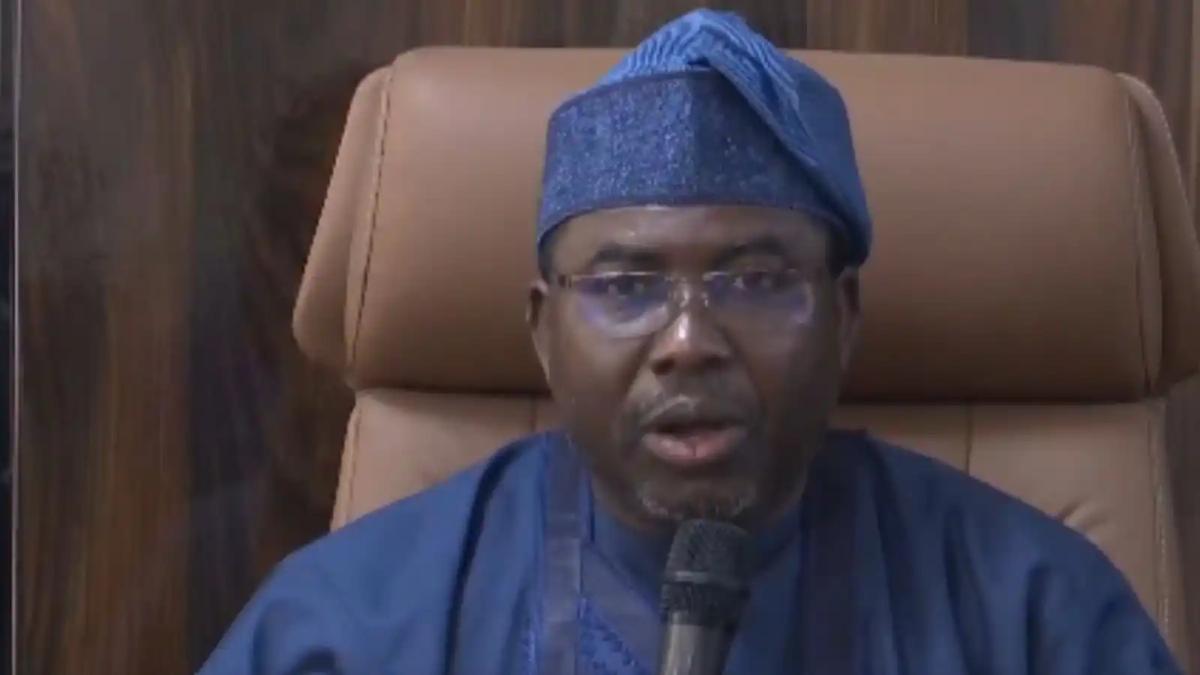
On Friday, INEC Chairman, Joash Amupitan, announced during a press briefing in Abuja that the presidential and national assembly polls will hold on February 20, 2027, while governorship and state assembly elections are fixed for March 6, 2027.
The electoral body also scheduled party primaries between May 22 and June 20, 2026, for political parties to nominate their candidates.
He explained that the timetable was determined in line with the provisions of the 1999 Constitution (as amended).
MOST READ ARTICLES
However, the scheduled dates coincide with the Islamic holy month of Ramadan, which is projected to begin on February 8, 2027, and end around March 10, 2027, according to the 1448 AH Islamic calendar.
This development has sparked concerns among some Nigerians, especially Muslims, who noted that fasting could pose physical challenges, potentially affecting voter turnout and slowing election duties.
Reacting to the announcement, former Peoples Democratic Party presidential candidate, Atiku Abubakar, urged the commission to reconsider the February 20, 2027 date, citing worries over its overlap with Ramadan.
On Friday, through his official X account, Atiku mentioned that the suggested date is “right in the middle of the Ramadan period (February 7 to March 8, 2027), a special time for fasting, thinking, and spiritual practice for many Nigerian Muslims.”
Bashir Ahmad, a former aide to late President Muhammadu Buhari, also appealed to INEC to review the timetable.He tagged INEC on his X post, which partly said: “If the goal is to promote full and inclusive involvement in the election process, holding such an important national event during Ramadan could create difficulties for many people in the country.
“Many Muslims often cut back on busy daily tasks during this time so they can focus more on their religious duties. Because there are a lot of Muslims in this country, it might be a good idea to think again about when something happens so that more people can take part and it’s easier for everyone. I hope this observation is understood in a way that promotes unity and brings people together.”
The National Missioner of Ansar-Ud-Deen Society of Nigeria, Sheikh AbdurRahman Ahmad, also criticised INEC’s decision, describing it as insensitive to Muslim faithful.
The respected cleric urged the commission to move the elections outside Ramadan, noting that election schedules have been adjusted previously.
“As Muslims, we do not complain when elections do not affect our religious activities. However, we must make our feelings known when actions appear to disregard our religious obligations. Millions of Nigerian Muslims are stakeholders in the Nigerian project and should be respected when fixing election dates. Elections are national exercises that should encourage the broadest participation. Fixing the polls during Ramadan may disenfranchise or discourage the active engagement of many Muslims,” he said.
However, INEC, through a statement issued by National Commissioner and Chairman of the Information and Voter Education Committee, Mohammed Haruna, said the timetable was carefully prepared in line with constitutional provisions, the Electoral Act 2022, and its electoral guidelines.
Haruna noted that the commission’s regulations, in force since 2019, clearly specify when general elections should be conducted.
He quoted paragraph two of the regulation, which says: “The elections for the offices of President and Vice President, as well as the National Assembly, will take place on the third Saturday of February in any general election year. The elections for the offices of Governor and Deputy Governor, as well as the State Houses of Assembly, will happen two weeks after that.”
He added, “Based on this, and following these existing laws and rules carefully, the Commission set Saturday, February 20, 2027, for the Presidential and National Assembly elections, and Saturday, March 6, 2027, for the Governorship and State Houses of Assembly elections.”
Despite this explanation, the commission acknowledged the concerns expressed by stakeholders regarding the overlap with important religious observances.
The commission stated that it recognises all genuine concerns that could influence participation and election management.
He said that because of these changes, “the Commission is now talking to different groups and might, if needed, ask for legal changes to deal with the issues raised, but always making sure any changes follow the laws and the constitution.”
INEC reaffirmed its commitment to transparency, fairness, and credibility in conducting the 2027 general elections.“The public will be kept up to date on any new information that comes up,” the statement added.