

 iDeemlawful
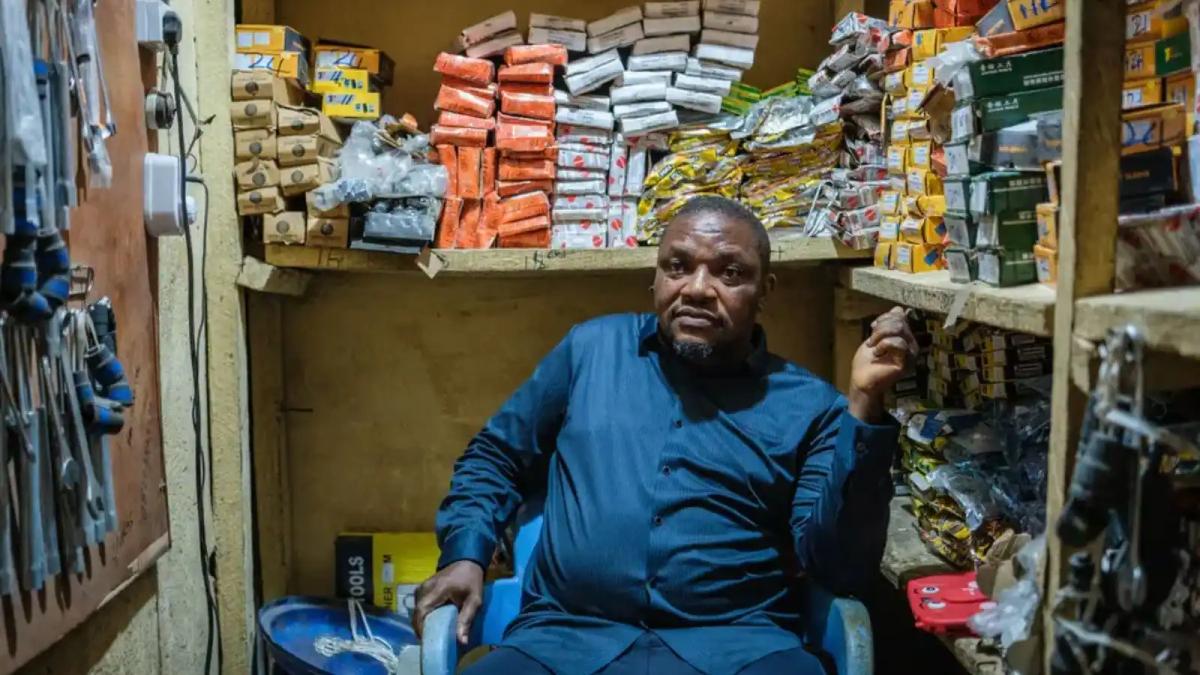
The United States relied on information and reports from Emeka Umeagbalasi, a screwdriver trader based in Onitsha, Anambra State, to carry out air strikes in Nigeria, according to a report by the New York Times.
Recall that in October, US President Donald Trump redesignated Nigeria as a “country of particular concern” following allegations that Christians were facing genocide in the country.
“Christianity is facing an existential threat in Nigeria. Thousands of Christians are being killed,” Trump said at the time, accusing radical Islamists of carrying out “mass slaughter”.
A month later, he warned that the US Department of War would invade Nigeria “guns-a-blazing” to wipe out Islamic terrorists if the Nigerian government failed to address the alleged genocide.
MOST READ ARTICLES
On December 26, the US carried out air strikes on ISIS terrorists in north-western Sokoto State “at the request of Nigerian authorities”.
According to the report, Umeagbalasi, founder of the International Society for Civil Liberties and Rule of Law, also known as Intersociety, is “an unlikely source of research that U.S. Republican lawmakers have used to promote the misleading idea that Christians are being singled out for slaughter” in Nigeria.
Umeagbalasi reportedly runs the non-governmental organisation alongside his wife from their home.
The report said US lawmakers Riley Moore and Ted Cruz, whom Trump had tasked with probing claims of Christian genocide in Nigeria, as well as New Jersey congressman Chris Smith, “have all cited his work”.
Umeagbalasi was quoted as claiming that 125,000 Christians have been killed in Nigeria since 2009, figures he said were drawn from Google searches, Nigerian media reports, secondary sources and advocacy groups such as Open Doors, a Christian organisation whose data Trump has referenced.
He told the New York Times that he rarely verifies the data he compiles. He also admitted that he seldom visits areas where attacks occur and often infers the religion of victims based on the location of incidents.
“If a mass abduction or killing happens in an area where he thinks many Christians live, he assumes the victims are Christians,” the report stated.
In an interview with The Sun, Umeagbalasi, when asked about his data sources, pointed to “location and space of an incident or crime scene” and described his approach as “one of the oldest natural methods in the world”.
The trader said he holds degrees in security studies, peace and conflict resolution from the National Open University of Nigeria, and portrayed himself as a very “powerful” and “knowledgeable” investigator.
Described in the report as a self-acclaimed criminologist, Umeagbalasi claimed there is a “strategy to annihilate all Christians and Islamize Nigeria”.
He further alleged that Nigeria has about 100,000 churches, with roughly 20,000 destroyed over the past 16 years. Asked about the source of this information, he said, “I Googled it”.
Drawing on information supplied by three congressmen — all of whom repeatedly referenced Umeagbalasi’s data — Trump authorised a series of strikes in Nigeria during the yuletide.
Again, in January, during a wide-ranging interview with the New York Times, Trump was asked whether the Christmas Day air strikes in northern Sokoto State targeting Islamist militants were part of a broader military campaign.
“I’d love to make it a one-time strike. But if they continue to kill Christians it will be a many-time strike,” he said.
The Nigerian government has rejected Trump’s earlier claims that it is failing to protect Christians from jihadist attacks, stating that “Muslims, Christians and those of no faith alike” are targeted.
Allegations of a genocide against Christians in Nigeria began circulating last year within some right-wing circles in the United States, but organisations that track political violence in Nigeria say most victims of jihadist groups are Muslims.
When questioned about this during the interview published on Thursday, Trump responded: “I think that Muslims are being killed also in Nigeria. But it’s mostly Christians.”
Nigeria’s population of more than 230 million people is roughly evenly split between Christians, who are largely concentrated in the south, and Muslims, who predominantly reside in the north.