iDeemlawful
  • News
  • Commentaries
  • Education
  • CourtRoom
  • Tech
  • Career
  • Lifestyle
  • World
iDeemlawful
  • News
  • Commentaries
  • Education
  • CourtRoom
  • Tech
  • Career
  • Lifestyle
  • World
iDeemlawful
iDeemlawful
  • About
  • Advertise
  • Editorial
  • Support

Copyright 2021 - All Right Reserved. Designed and Developed by PenciDesign

Category:

CourtRoom

A Nigerian Online News, Breaking News, Nigerian News, Legal Analysis, Law and Governance, Commentaries, Business and Politics.

tanko muhammad cjn 750x448
CourtRoom

Former Chief Justice of Nigeria, Tanko Muhammad, dies at 71

ideemlawful profile1iDeemlawful December 16, 2025
ideemlawful profile1iDeemlawful

A former Chief Justice of Nigeria (CJN), Justice Ibrahim Tanko Muhammad (retd.), has passed away.

The former head of the Nigerian judiciary died at the age of 71 in a hospital in Saudi Arabia, just about two weeks before he would have turned 72 on December 31.

Confirmation of Muhammad’s death came on Tuesday in Abuja through a condolence message issued by the Nigerian Association of Muslim Law Students (NAMLAS).

In the message titled “NAMLAS Condolence Message on the Passing of Hon. Justice Ibrahim Tanko Muhammad, GCON, Former Chief Justice of Nigeria,” the association described his death as a major loss to the nation.

“Indeed, to Allah we belong, and to Him we shall return.

“The Nigeria Association of Muslim Law Students (NAMLAS), National Headquarters, Abuja, receives with profound sorrow the news of the passing of Honourable Justice Ibrahim Tanko Muhammad, GCON, former Chief Justice of Nigeria. His demise is a monumental loss to the Nigerian judiciary, the legal profession, the Muslim Ummah, and the nation at large,” NAMLAS said.

The association described Justice Muhammad as “a towering figure of integrity, humility, and unwavering commitment to justice.”

NAMLAS stated that during his years on the Bench, Muhammad “exemplified the highest ideals of the Bench—fairness, courage, and fidelity to the rule of law.”

“As Chief Justice of Nigeria, he discharged his responsibilities with wisdom and restraint, leaving behind a legacy of service that will continue to guide generations of legal practitioners,” the statement added.

In addition to his judicial responsibilities, the association acknowledged the late justice’s role in mentoring young Muslim law students nationwide.

“To NAMLAS, the late Chief Justice was more than a jurist; he was a fatherly pillar and a source of encouragement to Muslim law students across the country,” it said.

The association further noted that the late jurist’s “support, moral guidance, and openness to the aspirations of young Muslim legal minds reflected his deep belief in mentorship, continuity, and the nurturing of future custodians of justice.”

It conveyed condolences to his immediate family, the Nigerian judiciary, and the country.

“We extend our heartfelt condolences to his family, the Nigerian Judiciary, the Government and people of Nigeria, and the entire Muslim Ummah”.

The association also prayed for the repose of his soul, asking Allah to forgive his shortcomings, accept his good deeds, and grant him “the highest abode in Jannatul Firdaus.”
December 16, 2025 0 comments
0 FacebookTwitterPinterestEmail
dr chris ngige
CourtRoom

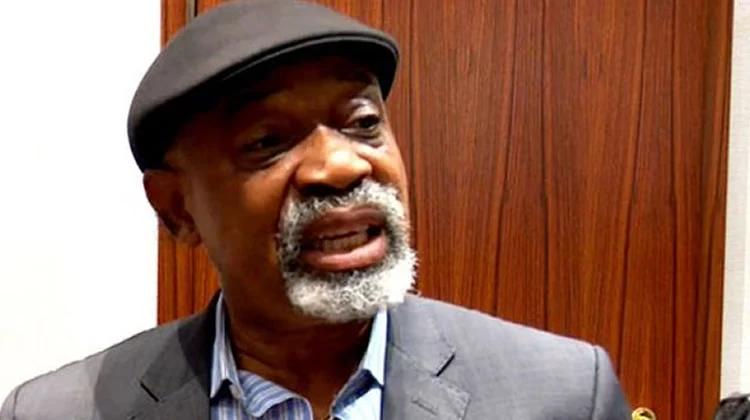
₦2.2bn fraud case: Court Fixes Date to Rule on Ngige’s Bail

ideemlawful profile1iDeemlawful December 16, 2025
ideemlawful profile1iDeemlawful

The Federal Capital Territory High Court sitting in Gwarimpa, Abuja, has scheduled Thursday, December 18, to deliver its ruling on the bail application filed by former Minister of Labour and Employment, Chris Ngige, who is facing an eight-count ₦2.2 billion contract fraud charge instituted by the Economic and Financial Crimes Commission.

Justice Maryam Hassan fixed the date after counsel to the EFCC, Sylvanus Tahir, SAN, and defence counsel, Patrick Ikwueto, SAN, presented arguments for and against the bail request.

When the case came up for hearing on Monday, Tahir recalled that proceedings had been adjourned from Friday to Monday specifically for arguments on the bail application.

He explained that the court granted the adjournment to allow the prosecution, which was served with the bail motion on Friday morning, adequate time to examine the application and respond.

He, however, informed the court that the prosecution had since complied.

“The prosecution filed a counter-affidavit to the bail application today, December 15,” he said.

In response, lead defence counsel, Ikwueto, rose to move the bail application on behalf of the defendant.

In his submissions, he urged the court to grant bail, insisting that the former minister was not a flight risk, contrary to the prosecution’s assertions.

“The application was filed on December 11, 2025. It is seeking, my Lord, medical relief, which is bail. We rely on your Lordship to consider the application. My Lord, we have a further affidavit of seven paragraphs,” he said.

Addressing the prosecution’s counter-affidavit, Ikwueto stated: “My Lord, I can see that the prosecution has filed a counter-affidavit. I ask your Lordship for a little time to address paragraphs eight and nine of the counter-affidavit.

“Paragraphs eight and nine state that the defendant poses a flight risk and that no amount of sureties can prevent him from fleeing abroad and abandoning his trial.”

He argued that while the prosecution claimed the defendant breached an earlier administrative bail by failing to return his international passport after a medical trip abroad, documentary evidence showed that the passport was lost in London during the trip.

According to him, formal reports of the loss were made to the UK Home Office, the Nigerian High Commission in London, and authorities in Abuja.

He added that the EFCC did not state anywhere in its counter-affidavit that it investigated the alleged loss of the passport and found the claim to be untrue.

He further contended that documentary evidence outweighs sworn affidavits when both are placed side by side.

“Your Lordship knows that in our law, documents command a higher degree of acceptance than oral testimony in a sworn affidavit. Documents bear more authenticity than words from the vocal cords of man,” he said.

Ikwueto also described it as contradictory for the prosecution to allege that the defendant could flee the country when he no longer possessed an international passport.

“In this case, the issue is whether the defendant can flee. How? The defendant must have travel documents, and it is presently confirmed that he does not. I therefore urge your Lordship to be persuaded by the documents before you showing that the defendant lost his international passport and reported the loss to the High Commission in London.

“If the prosecution says the defendant is a flight risk and can leave the country at will while in possession of his travel documents, I submit that this statement, even though contained in an affidavit, is false.

“If this affidavit says the defendant has his international passport, and there is a report at the High Commission in London that he lost it, how will he pose a flight risk? How will he travel? There is no record that he has obtained a new passport from the Immigration Service,” he argued.

He further maintained that if the defendant were truly a flight risk, he would not have returned to Nigeria after being granted administrative bail.

“The defendant is not a flight risk and has no capacity to leave this country now, despite being a former governor. If he were a flight risk, when he was given his passport in September, he would not have returned.

“He had to obtain an emergency travel certificate from the Nigerian High Commission in London to return. Your Lordship knows that this certificate is a one-off document. It cannot be used to travel out of Nigeria; it is only for entry and expires after use. There is no denial that this was how the defendant returned, and the certificate was stamped,” he said.

Ikwueto also argued that the defendant is not a criminal and has no prior criminal history aside from the current charge.

“It is impossible for the defendant to commit the offence again. He is no longer a minister and may not be one in the near future. There is no likelihood that he will commit the offence again if granted bail.

“The defendant has held many positions in this country. He is being charged in respect of his last position, but apart from this charge, he has no criminal record,” he said.

He further urged the court to consider the defendant’s health, noting that he had been unable to access necessary medical treatment due to the loss of his passport, which compelled him to return to Nigeria instead of travelling onward to the United States.

“He has to attend to his deteriorating health conditions, especially his sight. Yesterday, when I was with him, every other minute, he had to excuse himself to administer eye drops. Your Lordship may also take into account his age and health condition. The defendant needs to be in good health to stand this trial,” he said.

“We urge your Lordship to exercise your discretion. Your Lordship may impose whatever terms you deem fit. The defendant is not charged with a capital offence or an offence that is not bailable. We urge your Lordship to grant bail on favourable terms,” he added.

Opposing the application, the EFCC urged the court to deny bail, arguing that the former minister had breached the conditions attached to an earlier administrative bail.

“My Lord, in stiff opposition to the bail application, the prosecution filed a counter-affidavit and a written address in opposition to the defendant’s written address.

“We urge this honourable court to refuse the application,” Tahir said.

He noted that although the defendant undertook to return his passport by November 19, he failed to do so.

“From the travel pass, the defendant returned on November 14, but the document was never forwarded to the EFCC. We only saw it here. He did not present himself to the EFCC to report his return, nor did he return his travel document as undertaken,” Tahir said.

He argued that even though the defendant claimed his passport was lost in London, he returned to Nigeria to swear an affidavit of loss rather than doing so in the United Kingdom.

“The right thing would have been to depose to an affidavit of loss in the UK, not present one from a court in Maitama. The defendant is in gross breach of the administrative bail conditions,” he said.

Tahir further argued that the bail application was an attempt by the defendant to continue benefiting from the administrative bail earlier granted by the EFCC, which he had already forfeited.

He cited Section 162 of the Administration of Criminal Justice Act 2015, submitting that bail may be refused where a defendant frustrates the objectives of the criminal justice system.

“If the defendant claims to have lost his passport on November 10 in the UK, returned on November 14, and then stayed away until authorities came for him, has he not undermined the bail system?” he asked.

He added that the defendant failed to voluntarily report to the EFCC upon his return.

“He did not come to explain, ‘This is what happened.’ No exhibits were attached, and he did not submit himself to the EFCC. We urge the court to refuse the bail application and grant an accelerated hearing of the trial,” he said.

Responding, defence counsel argued that a lost foreign passport should be reported to the police, while EFCC counsel agreed but maintained that such a report should be made in the jurisdiction where the loss occurred, namely London, and not Nigeria.

After listening to arguments from both sides, Justice Hassan adjourned the case to December 18 for ruling on the bail application.

December 16, 2025 0 comments
0 FacebookTwitterPinterestEmail
supreme court
CourtRoom

Supreme Court Backs President’s Emergency Rule, Suspension of Elected Officials

ideemlawful profile1iDeemlawful December 16, 2025
ideemlawful profile1iDeemlawful

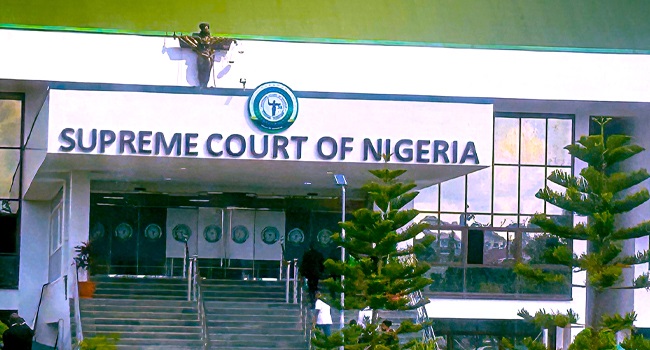
The Supreme Court on Monday dismissed the suit instituted by Adamawa State and 10 other Peoples Democratic Party-led states challenging the legality of the state of emergency declared by President Bola Tinubu in Rivers State.

Recall that Tinubu had imposed emergency rule in Rivers State and suspended elected state officials for a period of six months.

In a split decision of six to one, the apex court held that the plaintiffs, comprising the 11 PDP-governed states, failed to disclose any reasonable cause of action capable of invoking the court’s original jurisdiction.

Justice Mohammed Idris, who delivered the lead majority judgment, held that the plaintiffs did not demonstrate the existence of any actionable dispute between them and the federation that would warrant the Supreme Court’s exercise of original jurisdiction.

The apex court affirmed the constitutional authority of the President to proclaim a state of emergency in any state to forestall a breakdown of law and order or prevent a slide into chaos or anarchy.

The court further ruled that during the subsistence of such an emergency, the President may suspend elected officials, provided the suspension is limited in duration.

Justice Idris held that Section 305 of the 1999 Constitution empowers the President to adopt extraordinary measures necessary to restore normalcy once a state of emergency has been declared.

According to him, the constitutional provision does not expressly define the scope of such extraordinary measures, thereby granting the President discretion on the appropriate steps to take in the circumstances.

Justice Idris struck out the suit for lack of jurisdiction but nonetheless proceeded to consider the substantive issues and dismissed the case on its merits.

However, Justice Obande Ogbuinya dissented, holding that the suit succeeded in part.

While he agreed that the President possesses the power to declare a state of emergency, he ruled that such authority does not extend to the suspension of elected state officials, including governors, deputy governors, and members of state legislatures.

The suit was filed by the Attorneys-General of Adamawa, Enugu, Osun, Oyo, Bauchi, Akwa Ibom, Plateau, Delta, Taraba, Zamfara, and Bayelsa states.

Marked SC/CV/329/2025, the suit was founded on eight grounds. The plaintiffs asked the Supreme Court to determine whether the President has constitutional authority to suspend a democratically elected state government and whether the procedure adopted in declaring emergency rule in Rivers State violated the 1999 Constitution.

Recall that on March 18, Tinubu declared a state of emergency in Rivers State and suspended Governor Siminalayi Fubara, his deputy, Ngozi Odu, and all elected members of the State House of Assembly for six months over political tensions in the oil-producing South-South state.

According to Tinubu, the decision was taken to restore stability in Rivers State, which had been engulfed in political turmoil arising from disagreements between the governor and state lawmakers.

Following the proclamation, the President appointed retired Vice Admiral Ibok-Ette Ibas, who has since been appointed an ambassador, as the administrator of the state to oversee governance.

Six months later, Fubara resumed office and pledged to promote peace and reconciliation in the state.

December 16, 2025 0 comments
0 FacebookTwitterPinterestEmail
maryam sanda in court
CourtRoomFeatured

Supreme Court Nullifies Tinubu’s Pardon, Reinstates Death Sentence for Maryam Sanda

ideemlawful profile1iDeemlawful December 12, 2025
ideemlawful profile1iDeemlawful

The Supreme Court has struck down the presidential pardon granted by President Bola Ahmed Tinubu to Abuja-based housewife, Maryam Sanda.

President Tinubu had earlier reduced Sanda’s punishment to 12 years as part of a broader pardon that included figures such as Sir Herbert Macaulay, Major General Mamman Vatsa, and Ken Saro-Wiwa (posthumously), along with many other inmates convicted of crimes ranging from drug offenses to fraud, aimed at easing prison congestion and advancing restorative justice.

In a ruling delivered on Friday, the Supreme Court, in a four-to-one majority decision, reinstated the death sentence initially imposed by the Court of Appeal, Abuja.

The Court of Appeal had earlier affirmed the judgement of a High Court of the Federal Capital Territory, FCT, which ordered her execution by hanging.

The Apex Court addressed every issue raised in Sanda’s appeal and dismissed the case, declaring it lacked substance.

Justice Moore Adumein, who read the lead decision himself, stated that the prosecution had successfully established the case beyond reasonable doubt, noting that the Court of Appeal acted rightly in upholding the trial court’s verdict.

Sanda received a death-by-hanging sentence in 2020 for the death of her husband, Bilyaminu Bello, following a domestic conflict.

Although she had spent six years and eight months at Suleja prison, the presidential pardon had reduced her overall term to 12 years, “based on compassionate ground, in the best interest of the children, good conduct, embraced new lifestyle, model to prisoners and remorsefulness.”

December 12, 2025 0 comments
0 FacebookTwitterPinterestEmail
supreme court
CourtRoomNews

Supreme Court Dismisses Osun Government’s Suit on Withheld LG Funds Over Lack of Jurisdiction

Abduljelil Issa December 5, 2025
Abduljelil Issa

The Supreme Court of Nigeria has struck out a suit filed by the Attorney General of Osun State, Oluwole Jimi-Bada, against the Attorney General of the Federation (AGF), Lateef Fagbemi, in relation to the dispute over the withheld allocations due to local governments in the state.

In a split decision of six justices to one, the apex court held that the Osun State Attorney General and Commissioner for Justice has no legal right to have instituted the case on behalf of the 30 local governments in the state.

The court held that those who won the local government election and were inaugurated are the right persons who can sue and be sued directly.

Justice Mohammed Idris, who read the lead judgment, held that the Federal Government was wrong in withholding the local government fund, adding that the action was in breach of the 1999 Constitution.

The Supreme Court ruled that the Federal Government improperly seized funds and urged it to ensure that the funds are directly allocated to local accounts.

The court dismissed the AGF’s contempt allegations against Osun, adding that he was in more contempt than Osun by not paying the fund as required by law.

Justice Idris, however, said that since there was no evidence that the Osun Attorney General was briefed by the local governments, he ought not to have filed the case on their behalf.

In a minority judgment, Justice Emmanuel Agim disagreed with the six other justices, holding that the Osun Attorney General has the right to institute the case.

Justice Agim said that the action of the federal government in withholding the local governments’ funds was in bad taste because it was capable of crippling the activities of the councils.

December 5, 2025 0 comments
0 FacebookTwitterPinterestEmail
x5lbn84jdu
CourtRoom

What Appeal Court Rules Declaring VIO illegal in Nigeria really Mean

Abduljelil Issa December 4, 2025
Abduljelil Issa

On December 4, 2025, the Court of Appeal (sitting in Abuja) unanimously upheld a ruling that prohibits VIO (and its parent agency Directorate of Road Traffic Services, DRTS) from stopping, impounding, confiscating vehicles or imposing fines on motorists. The appeal by VIO was dismissed. The Court found “no iota of merit” in their appeal. The Court’s decision affirmed earlier findings by the Federal High Court in Abuja (in case FHC/ABJ/CS/1695/2023) which initially declared that there is no law empowering VIO to impound vehicles or fine motorists for traffic‐related offences.

The Court found that VIO and its officials lack statutory authority; in other words, no law empowers them to seize vehicles or levy fines on motorists. The earlier High Court judgment (now upheld) characterized such actions like impounding, confiscation, fines as “wrongful, oppressive and unlawful.” The Court also issued a perpetual injunction restraining VIO (and related agencies, their agents or assigns) from repeating such actions, effectively making the ruling permanent.

THIS IS WHAT THE JUDGEMENT MEANS

★ VIO officers cannot legally stop motorists on the road for the purpose of impounding or fining their vehicles.

★ VIO cannot confiscate or impound vehicles under traffic‐ or inspection-related pretexts.

★ VIO cannot levy fines or other monetary penalties against motorists or drivers for traffic violations, at least not on the basis of the powers they claimed before.

Any attempt to do so would be unlawful, oppressive, and a violation of fundamental rights.

Do you think the judgement is in favour of the struggling drivers? Let’s hear your thoughts on this in the comment section.

December 4, 2025 0 comments
0 FacebookTwitterPinterestEmail
img 2765
CourtRoom

Appeal Court Declares VIO Illegal in Nigeria

ideemlawful profile1iDeemlawful December 4, 2025
ideemlawful profile1iDeemlawful

The Court of Appeal in Abuja on Thursday upheld the ruling that restrained the Directorate of Road Traffic Services and Vehicle Inspection Officers (VIO) from confiscating vehicles or levying fines on drivers.

In a unanimous ruling delivered by a three-member panel, the appellate court held that it had no grounds to overturn the October 16, 2024 decision of the Federal High Court, Abuja, which barred VIO personnel from harassing motorists on public roads.

As a result, the court dismissed as unmeritorious the appeal filed by the VIO.

The lead judgment was delivered by Justice Oyejoju Oyewumi.It will be recalled that Justice Nkeonye Maha of the Federal High Court previously held that no existing law authorises the VIO to stop, seize, impound or penalise motorists for any violation.

Her ruling stemmed from a fundamental rights enforcement suit, marked FHC/ABJ/CS/1695/2023, filed by public interest lawyer Mr Abubakar Marshal.

The Applicant narrated that VIO officials forcefully halted him at Jabi District in Abuja on December 12, 2023, and unlawfully took his vehicle without any valid basis.

He urged the court to determine whether the officials’ conduct was not wrongful, oppressive, illegal and a grave encroachment on his fundamental rights.

While granting all the reliefs sought, Justice Maha specifically restrained the Respondents and their representatives from impounding or confiscating vehicles or imposing fines on motorists, noting that such actions were wrongful, oppressive and unlawful.

The court also issued a perpetual injunction barring the Respondents — whether personally or through agents, privies or allies — from further infringing on Nigerians’ rights to movement, presumption of innocence and property without legal basis.

Justice Maha affirmed that only a competent court has the lawful authority to impose fines or sanction motorists found to have breached existing laws.

The court further ruled that the Respondents violated the Applicant’s right to property under Section 42 of the 1999 Constitution (as amended) and Article 14 of the African Charter on Human and Peoples’ Rights.

It also held that the Respondents lacked statutory powers to seize vehicles or impose fines, stressing that such conduct violates motorists’ rights to fair hearing, movement and presumption of innocence per Sections 6(6)(b), 36(1)(8)(12), 41 and 42 of the Constitution, as well as Articles 2, 7(3), 12 and 14 of the African Charter.

Although the Applicant, represented by a legal team led by Mr Femi Falana, SAN, requested N500 million in damages and a published apology in three national newspapers, the court awarded N2.5 million.

The other Respondents included the Directorate of Road Traffic Services, its Director, the Abuja Area Commander as of December 12, 2023 identified as Mr Leo, team leader Mr Solomon Onoja, and the Minister of the Federal Capital Territory.

Unhappy with the verdict, the Respondents appealed — an appeal that was dismissed on Thursday.

December 4, 2025 0 comments
0 FacebookTwitterPinterestEmail
Newer Posts
Next Posts
  • Facebook
  • Twitter

All Right Reserved. Developed by Deemlawful


Back To Top
iDeemlawful
  • Home